
Baytown, TX · Garage Door Service
Doors on Houses Built Before Insulation Rules Caught Up
Baytown homes built mostly 1956-2011, median 1983, often carry doors from before insulation codes tightened. Here's what that means for your panel, track, and spring.
- Repairs & new doors
- Springs & openers
- Serving 4 nearby communities
Checking It Yourself
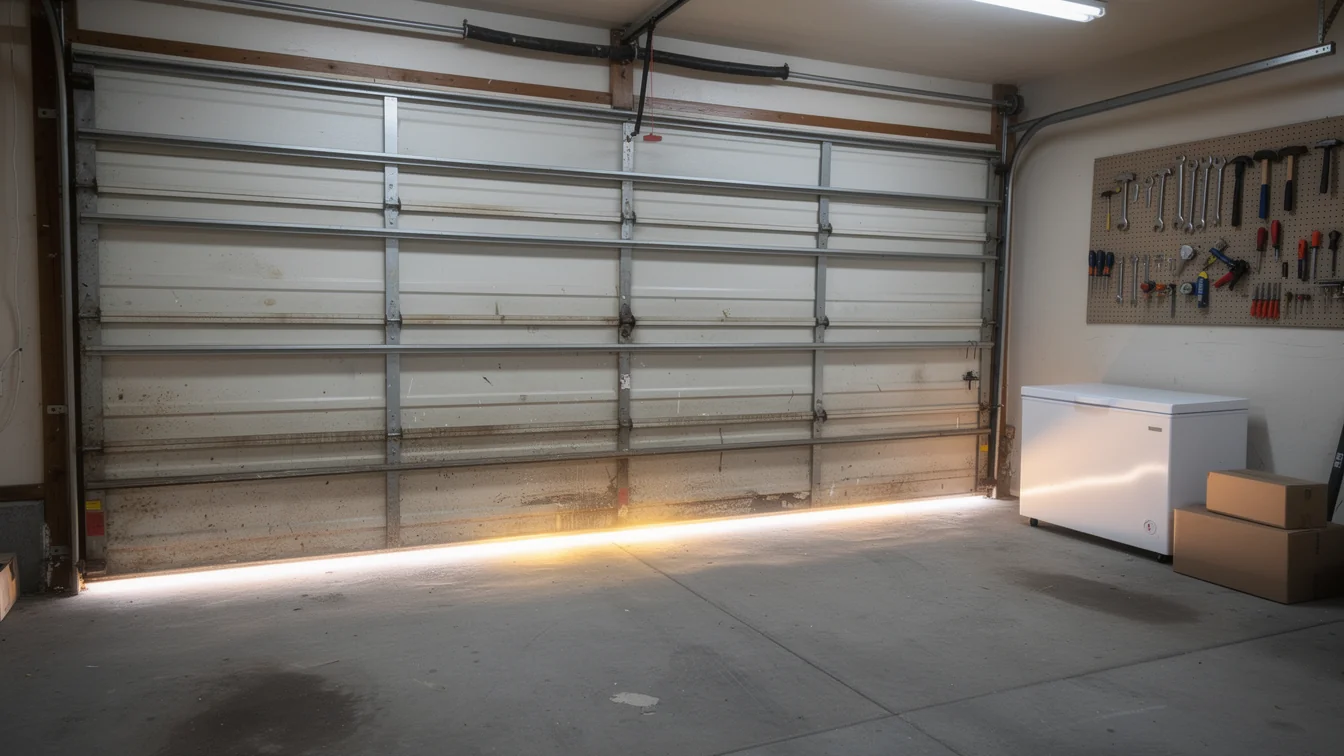
Baytown's housing stock runs 1956 to 2011, with the median build year sitting at 1983 and most of the 22 named areas filled in during the 1980s and 90s. That matters here because a lot of those builder-grade doors went up before insulation requirements got tightened into code. If your house falls in that window, start by looking at the door's cross-section at the edge - a single layer of steel with no foam backing is original-era, not a later upgrade.
Next, check the bottom seal. On a door this old, the rubber astragal has usually hardened and cracked, which lets air and bugs in around the slab. Push on the middle of a panel with your palm. If it flexes more than a quarter inch, there's no insulation layer stiffening it, which lines up with pre-code construction.
Look at the spring too. A door from the 1980s build era often still has its original torsion spring if nobody's touched it, and that spring is past its rated cycle count by now. Grab the lift handle and try to raise the door by hand with the opener disconnected. If it's heavy and jerky instead of smooth, the spring is tired, not just the door being uninsulated.
What the Weather Here Does to It
Baytown sits in a mild climate band with occasional freezes, not the hard freeze-thaw cycles that crack concrete up north. That's actually easier on a garage door than a lot of regions - you don't get the ice-jam problems that tear seals apart overnight. But mild-with-freeze has its own wear pattern on older, uninsulated doors.
A single-layer steel door from the 1983-median build era has nothing stopping temperature swing from transferring straight through the panel. On the rare freeze mornings, that steel contracts just enough to tighten tolerances on tracks that were already loose from decades of use, and you'll hear it - a grinding or binding sound that wasn't there the day before. It usually loosens back up once the temperature climbs, which is why people ignore it for years.
Humidity does more damage here than cold does. Without a foam core, moisture sits against the inside face of the steel and starts rust from behind, where you can't see it until the panel bottom is flaking. On a door built before insulation standards, that's the failure mode to watch, not frozen tracks.
The Situation
With a median household income of $72,937 across the service area and most houses built in that 1983-ish window, the typical call here isn't a brand-new door with a bad sensor. It's a 25 to 40 year old single-layer door that was never built with a thermal barrier, paired with original hardware that's finally giving out - spring, rollers, sometimes the track itself bent from years of a heavy, uninsulated panel riding on it.
Because the service area spans 22 named communities built mostly in that 1980s-90s stretch, this isn't a one-house problem - it's the baseline condition for a big share of the housing stock out here. The door still closes, the opener still runs, but the panel itself is doing none of the work an insulated door would do, and the spring is carrying more cycles than it was rated for.
The honest limitation: if the frame and track are still square and the opener is healthy, a weatherstrip and insulation kit retrofit can buy years without a full replacement. If the panel is already rusted through from the inside or the track is bent, retrofitting is wasted labor - that's a replacement job, not a repair.
What Most People Get Wrong
The most common mistake is assuming a noisy or heavy door means the opener is failing. On houses from this build era, it's almost always the spring or the lack of insulation making the panel heavier than the opener was ever sized for - swapping the opener doesn't fix a steel panel with no foam core doing all the flexing.
The second mistake is treating weatherstrip replacement as a full insulation fix. A new bottom seal stops water and drafts at the slab line, but it does nothing for the panel itself. If the door was built before insulation code tightened, the steel is still bare in the middle, and that's where most of the heat loss and condensation problems start.
Third, people wait for a visible crack before calling anyone. On a single-layer door from the 1983 median build year, rust starts on the inside face first. By the time it shows on the outside, the panel's usually past the point where patching makes sense, and you're into panel or full-door replacement territory instead of a cheaper early fix.
Frequently asked questions
How do I know if my Baytown house has an original, uninsulated garage door?
Check the build year against Baytown's housing range - 1956 to 2011, median 1983. If your house falls near that median and the door hasn't been replaced, look at the panel edge: a single sheet of steel with no visible foam layer means it predates insulation code requirements.
Does Baytown's climate make insulation less important?
Baytown sits in a mild climate band with occasional freezes, so you're not dealing with heavy freeze-thaw damage. But humidity still causes rust from behind an uninsulated steel panel, which is often a bigger issue here than cold ever is.
Is it worth insulating an old door instead of replacing it?
If the track and frame are still square and the opener runs fine, a weatherstrip and insulation kit can extend the door's life for a reasonable cost. If the panel already shows rust from the inside or the track is bent, retrofitting won't hold and replacement is the better spend.
Why does my old door get loud on cold mornings?
On a single-layer steel panel from the 1980s-90s build era, temperature swings during Baytown's occasional freezes tighten track tolerances slightly, causing grinding or binding. It usually eases once temperatures climb back up, but it's a sign the hardware is original and aging.
Related garage door services in Baytown
More garage door guides
Book garage door service in Baytown
Call now or request a quote - tell us what the door is doing and where you are.