
Baytown, TX · Garage Door Service
How Long an Old Garage Door Lasts in Baytown
In Baytown, houses mostly date from the 1980s and 90s, with some from 1956. Here's how to judge if an aging garage door is worth repairing or replacing.
- Repairs & new doors
- Springs & openers
- Serving 4 nearby communities
Checking It Yourself
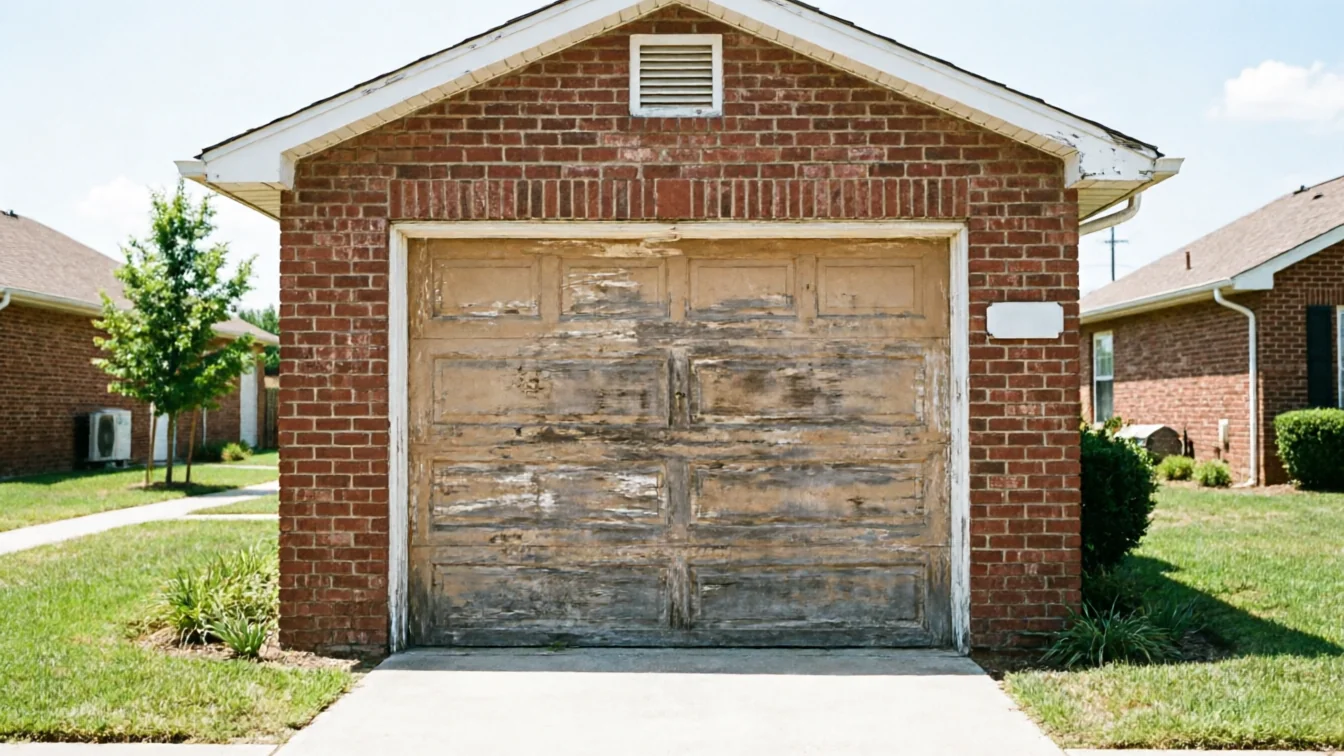
Start with the spring. If the door is heavy to lift by hand with the opener disconnected, the torsion spring is tired or broken, and that's a cheap fix compared to a new door. Look at the track next - on houses built in the 1980s and 90s, which is most of what you'll find around here, the track is usually galvanized steel bolted to wood jambs that have had thirty-plus years to shift. A track that's pulled away from the jamb on one side is a hardware problem, not a door problem. Check the bottom panel for rot or rust at the corners; panels made before the mid-90s were often thinner steel without the foam-filled construction that came later, and they dent and rust faster. Run your hand along the weatherstrip at the bottom - if it's cracked or gone, water gets under the door on anything built before 2000. None of this tells you to replace the whole unit. A spring, a hinge, a section of track, or a bottom seal are all individually repairable on almost any door from the 1956-2011 range this area was built in. What tells you it's time to replace is rust through the panel steel itself, or a torsion tube that's bent, not just loose.
What the Weather Here Does to It
This area sits in a mild climate band with occasional freeze, not the hard winters that force a full hardware upgrade. That's good news for repair costs - galvanized hardware here doesn't need the heavier cold-weather springs some northern installers push. But mild with occasional freeze still means temperature swings that work lubricant out of rollers and hinges over a season, and humidity that sits on steel track and bottom brackets longer than it would in a drier climate. The result on an older door, especially one from the 1980s stock common around here, is surface rust on the track rails and stiff rollers before anything structural fails. If you oil the hinges and rollers twice a year and the door still binds, the rail itself has pitted and that's a track swap, not a lube job. One honest limitation: we don't repaint or treat rusted track to stop it - once the rail pits enough to catch a roller, replacing that section is the only fix that holds.
The Situation
Baytown's housing stock runs from 1956 up through 2011, with the median build year around 1983, and most of the neighborhoods we work in - this side of town and out toward Highlands, Mont Belvieu, and Channelview - fall into that same 1980s-to-90s window. That matters for parts. A door installed in 1985 likely has a torsion spring system on a steel header bracket that's still a standard size, so parts are available and a repair is usually straightforward. A door from the 1956 end of the range, if it's still original, may have a side-mounted extension spring setup that newer torsion hardware doesn't bolt onto without an adapter. We see both. The practical question isn't the door's age by itself - it's whether the hardware generation matches what's still stocked. For the bulk of the 1980s-90s stock across this area, parts are common enough that repair almost always wins over replacement on cost alone.
What Most People Get Wrong
The most common mistake we see is someone replacing an entire door because one spring snapped, when the opener, track, and panels are all sound. A broken torsion spring on a double door from the 1980s-90s era that makes up most of this area's housing is a parts-and-labor job, not a demolition. The second mistake runs the other way: patching a bottom panel that's rusted through on a door old enough to be near the 1956 end of the build range, where the steel gauge is thinner and the rust rarely stops at one section. At that point a patch buys a year, maybe less. The honest line is this - if the spring, cables, rollers, or opener are the problem, fix them. If the rust has gotten into the panel steel itself, or the track rail is pitted past where a roller rides smooth, you're better off putting that money toward a new door than chasing it section by section.
Frequently asked questions
Is it worth fixing a garage door from the 1980s?
Usually, yes. Most houses in this area were built in that stretch, so parts for torsion springs, rollers, and standard track sizes are easy to source. Unless the panel steel itself has rusted through, repairing a door from that era costs far less than replacing it, and the hardware generation still matches what's commonly stocked.
Does Baytown's climate shorten a garage door's life?
Not dramatically. The mild climate here with occasional freeze doesn't demand heavy-duty cold-weather hardware, but humidity does work lubricant out of rollers and hinges faster than a dry climate would, and it causes surface rust on track rails over time. Regular lubrication catches most of it before it becomes a repair.
How do I know if my old door needs replacing instead of repair?
Check the panel steel for rust that's gone through, not just surface rust, and check the track rail for pitting deep enough to catch a roller. If it's just a spring, cable, hinge, or weatherstrip, repair it. If the structural steel itself has failed, replacement is usually the better money.
Related garage door services in Baytown
More garage door guides
Book garage door service in Baytown
Call now or request a quote - tell us what the door is doing and where you are.